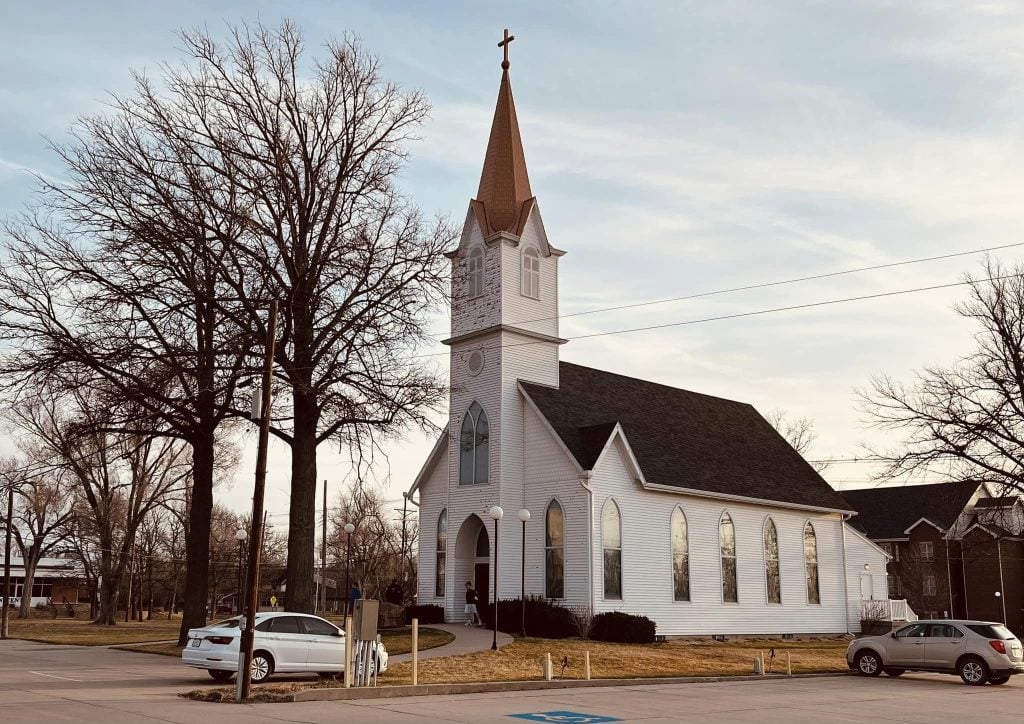


Declining church membership creates university hiring challenges
While the number of Churches of Christ declines in the…

|
Getting your Trinity Audio player ready...
|
From Florida College in Temple Terrace, Fla., to Pepperdine University in Malibu, Calif., historic ties connect 13 universities to Churches of Christ.

Candice McQueen
But they are not the same. Except when they are.
Generally, that association means “that you’re part of an education community that was started to be part of Churches of Christ,” said Lipscomb University President Candice McQueen.
That was the case with the Nashville, Tenn., university, launched by Restoration Movement ministers David Lipscomb and James A. Harding in 1891. It’s one of four higher education institutions founded more than a century ago with deep roots in Churches of Christ.
The oldest, Freed-Hardeman University in Henderson, Tenn., traces its origin to 1869. Elsewhere, church members started Abilene Christian University in Texas in 1906 and Harding University in Searcy, Ark., in 1924.
This is part of a series exploring the identity of Churches of Christ. Read more here.
The autonomous congregations these institutions reflect differ in size, culture, resources and sometimes doctrine. Geography plays a role, too. Pepperdine University overlooks the Pacific Ocean. Cotton fields surround Lubbock, Texas, home to Lubbock Christian University.
Enrollments range from a few hundred students to several thousand. But in the 21st century, these universities face a common enrollment challenge.
Their combined total number of first-time freshmen fell from 6,643 in 2000 to 5,801 in 2025 — a 13 percent drop. (Some of the universities are seeing overall enrollment increases, fueled largely by online and graduate programs.)
The decline in traditional student numbers coincides with an enrollment cliff documented in research by the Western Interstate Commission for Higher Education, which predicts the number of high school graduates will decline steadily for the next 15 years.
The trend is even more striking when considering first-time freshmen who identify as members of Churches of Christ: That number tumbled from 4,411 in fall 2000 to 1,576 in fall 2025 — a 64 percent decline.
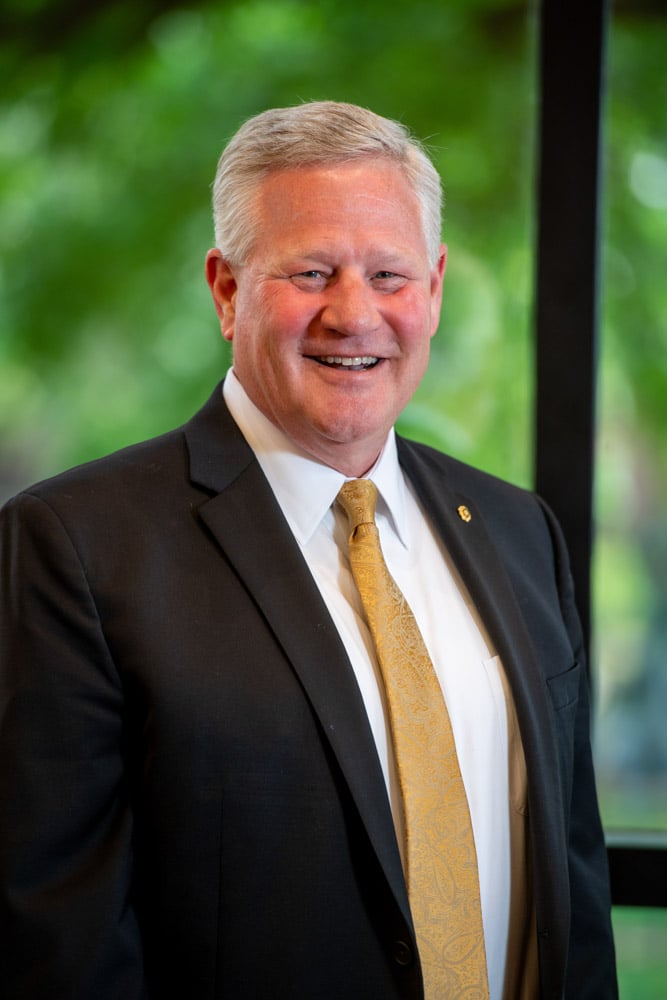
Mike Williams
A few higher ed institutions associated with Churches of Christ closed in recent years, including Ohio Valley University in Vienna, W.Va., in 2021 and Cascade College in Portland, Ore., in 2009. While still open, Rochester Christian University in Michigan last year hired its first president from outside the fellowship.
As the new century dawned, institutions associated with Churches of Christ drew two out of every three students, 66 percent, from within the fellowship.
Now, that’s down to 27 percent — about one in four — according to the data compiled in recent decades by the late Trace Hebert, who served as Lipscomb’s associate provost of research and graduate studies.
“That’s a cliff,” Harding President Mike Williams said of the trend. “And if we don’t think that has deep implications for our tribe, we’re kidding ourselves.
“And it’s not just ideological — we represent a pretty broad spectrum. … But the number is plummeting far faster than overall adherents to Churches of Christ.”
The Christian Chronicle spoke with 11 presidents of universities in the U.S. associated with Churches of Christ. Rochester Christian’s Reggies Wenyika declined. Through a university spokeswoman, Wenyika said, “Other presidents of C of C schools could speak more appropriately for this article.”
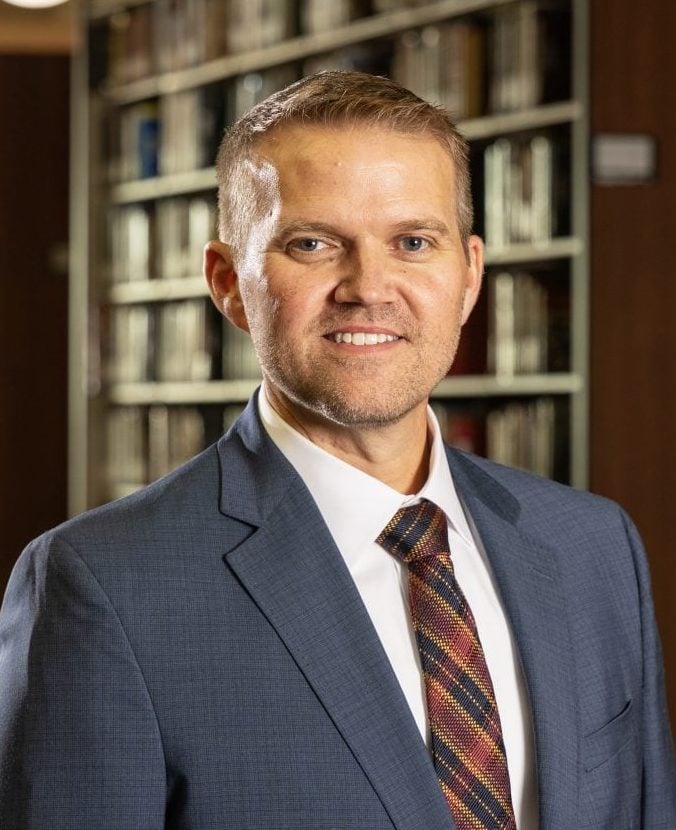
Keith Harris
The Chronicle also made multiple unsuccessful attempts to reach Ervin Seamster, president of Southwestern Christian College in Terrell, Texas. Southwestern is the only historically Black college associated with Churches of Christ.
Only one of the presidents interviewed, FHU’s Keith Harris, said that a majority of his university’s students still identify as members of Churches of Christ. Freed-Hardeman’s board has set specific expectations in that regard, Harris said.
Despite the declining proportion of students from Churches of Christ on their campuses, the university leaders stressed one common denominator: historic ties to the Restoration Movement, its traditions and tenets of faith.
That movement of the early 1800s, strongly identified with Barton W. Stone and Alexander Campbell, emphasized a mantra of “Christians only, but not the only Christians.” Stone and Campbell, both ordained Presbyterian clergymen, sought to unite Christians by abandoning denominations and relying solely on the Bible.
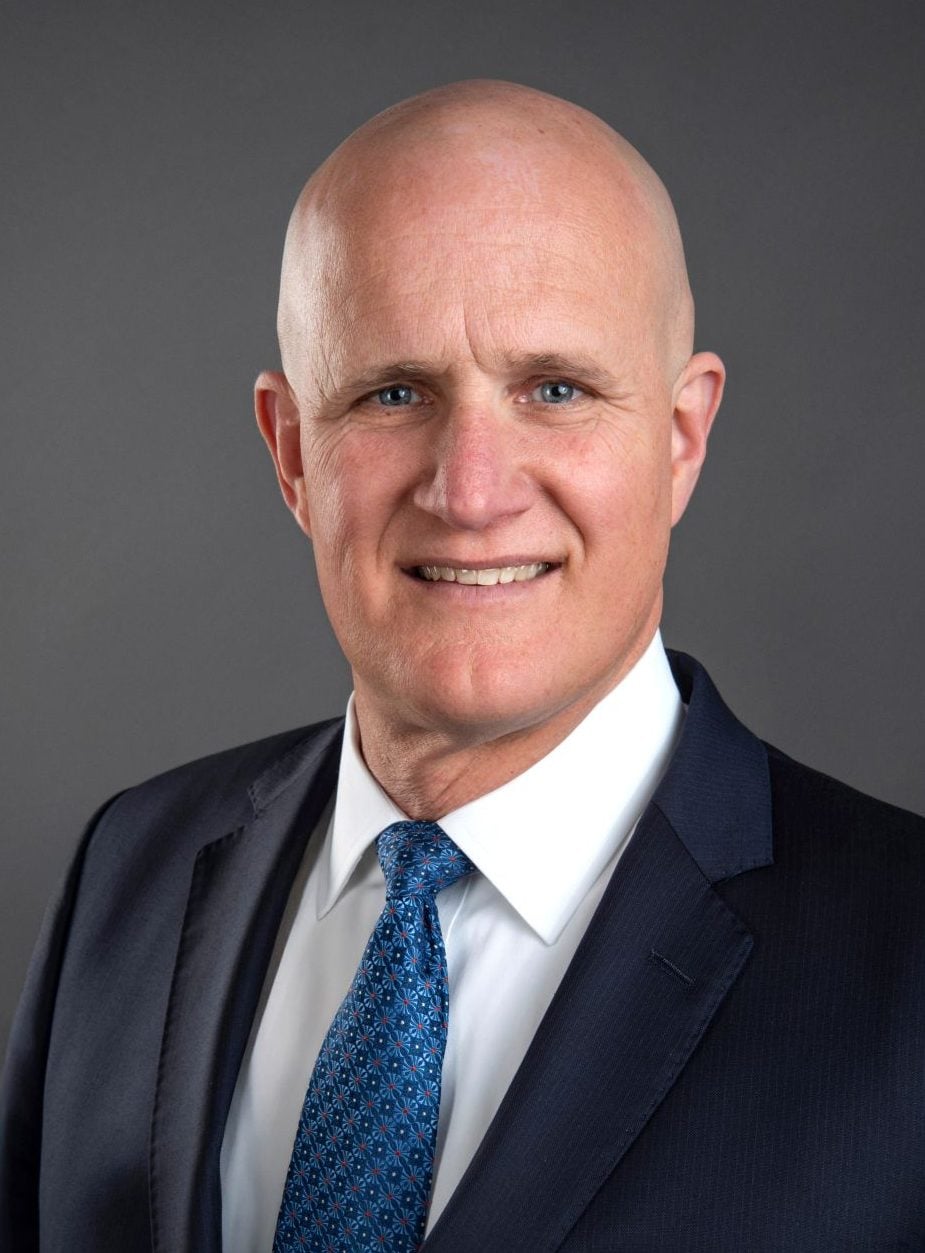
Jim Gash
“What it means to be a Church of Christ university will vary among institutions,” Pepperdine President Jim Gash said. “But having an allegiance to foundational principles of Churches of Christ — what I would categorize as including allegiance to Scripture, congregational autonomy, the Bible as the sole authoritative document, a low church, no requirement of certification or ordination — those are some of the specific attributes.”
Others echoed that list.
Abilene Christian’s Phil Schubert said: “All of us share some of those long-held, theological, denominational commonalities — whether you want to cite the old school ‘priesthood of all believers’ or the Bible as our only creed or baptism by immersion. We grew up hearing those as hallmarks of the faith.”

John Weaver
Scott McDowell, president of Lubbock Christian, added: “The best of Churches of Christ is a unity movement: ‘Let’s just be Christians, and let’s follow Scripture, be disciples of Jesus Christ.’ So to be a Church of Christ school at its best is to be a Christian school, a Christ-centered school.”
Florida College has roots in non-institutional Churches of Christ, a subset of the fellowship that believes the New Testament does not authorize churches to fund manmade institutions, including parachurch organizations. President John Weaver said Florida College “wouldn’t identify as a Church of Christ college.”
Weaver prefers the description “congregational” to “non-institutional” to describe the stream of the fellowship with which Florida College identifies. All trustees are members of a Church of Christ.
And Weaver emphasized that his college’s Restoration roots “exist and continue.”
Although typically begun by ministers, most of the universities associated with Churches of Christ were not intended solely to train preachers.

Timothy Westbrook
When Lipscomb was founded 135 years ago, McQueen said, “It was not founded to be a preachers’ school or seminary but where everyone who came to prepare for a career would be taught Bible alongside their academic program. They wanted personal interactions with faculty to support Scripture and be rooted in Churches of Christ. That vision and dream is really the same vision today.”
Timothy Westbrook, president of York University in Nebraska, agreed.
“From the beginning,” he said, “the idea of Christian schools to provide a Christian education for rising young adults in Churches of Christ has been part of our mission.”
That mission has helped connect the fellowship.
As Harding’s Williams described it, “Church of Christ schools have been a part of that soft glue that actually kept us together. Publications like The Christian Chronicle, lectureships, Christian colleges and these autonomous churches — somehow we lived together pretty homogeneously.”
But, “Today that fragmentation has severed us,” Williams said. “So who is the Church of Christ? It’s a really diverse group of churches and people.”
Before he became president of Harding, Williams served in the same role at Faulkner University in Montgomery, Ala.

Ken Jones
Ken Jones was president at Lubbock Christian for 19 years before taking that role at Oklahoma Christian University in Oklahoma City.
And McDowell, president at Lubbock Christian, previously served in vice presidential roles at Lipscomb and Abilene Christian.
All three talked about how diversity within the church has brought diversity to campuses.
“We have students coming from Churches of Christ that have very different experiences,” Jones said. “Now our campuses, particularly OC, are about 40 percent Church of Christ, and the rest come from all different kinds of faith backgrounds.”
Oklahoma Christian still honors and talks about its heritage, Jones said, but Churches of Christ “were born out of a heritage rich in humility and with a high view of Scripture — originally a nonjudgmental view of Scripture.”
That diversity changes the conversation.
“At the highest level there is God. Second, there is Jesus Christ, his son. Third, there is everything else.”
McDowell said he likes the explanation by Gerald Turner, an LCU and ACU alum who was president of Southern Methodist University in Dallas for 30 years.
“At the highest level there is God. Second, there is Jesus Christ, his son. Third, there is everything else,” McDowell said. “When you’ve got consensus on one and two, you have the luxury of having these discussions at level three. But you no longer have consensus. … We don’t have the luxury of fussing about this anymore.”
Westbrook came to York after 20 years at Harding where he directed an online Bible program.
“If I visit any campus, I feel a sense of being at home,” he said. “My wife and I were at Harding for 20 years. We both taught Bible at Harding. Our kids graduated from Harding.”
Related: Declining church membership creates university hiring challenges
The transition to York was smooth, he said, “because of a very common spirit, a dedication to mission … people making sacrifices for the mission of teaching, sharing our academic disciplines in ways we see lives transformed in the name of Jesus. That’s the commonality we all share.”
Westbrook and his fellow presidents meet annually. In November, they’ll gather on the campus of Faulkner University with President Mitch Henry.
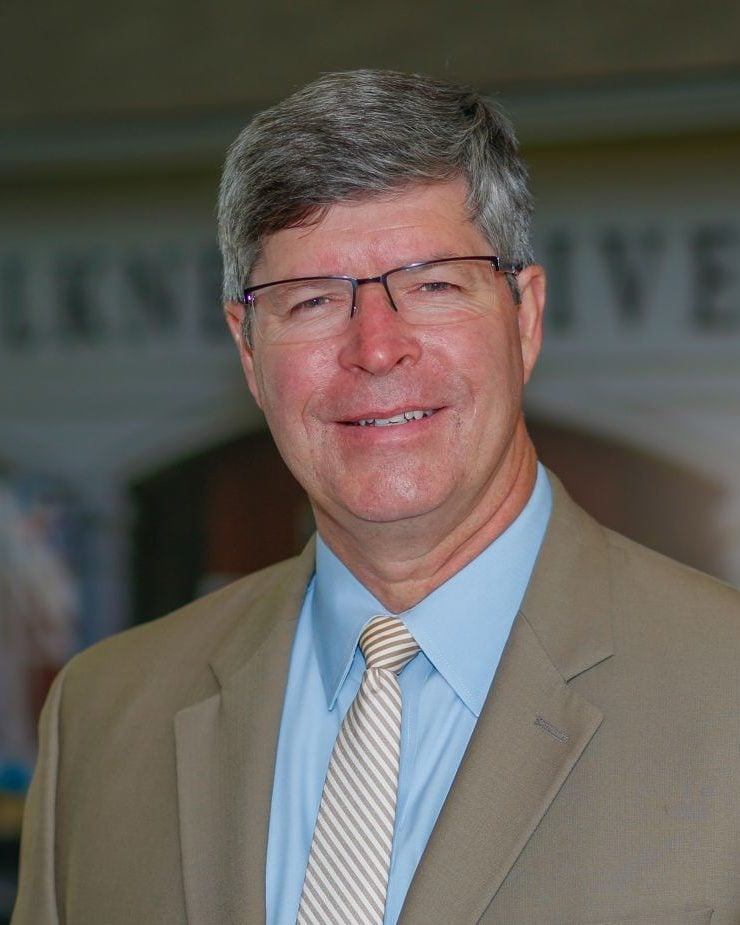
Mitch Henry
Across the group they speak well of each other. It’s a small club, after all.
Henry calls his colleagues “wonderful, good salt-of-the-earth faculty and staff that care about Christ and Christianity.
“I think at everyone’s core there’s at least a nod of respect and appreciation for the Restoration Movement and Restoration founders,” Henry said. “When it comes to differences, I think amongst schools there have been some that have taken a more broad approach toward public-facing comments about doctrine, where the school itself will go with regard to colleges of biblical studies. … Many of those fall along lines related to worship.”
Schools do take different approaches to instrumental worship and leadership roles for women in worship. Pepperdine, ACU and Lipscomb include both in some worship settings. Faulkner and Freed-Hardeman emphatically do not.
All grapple with the challenge of having a campus full of students from different churches and different Churches of Christ.
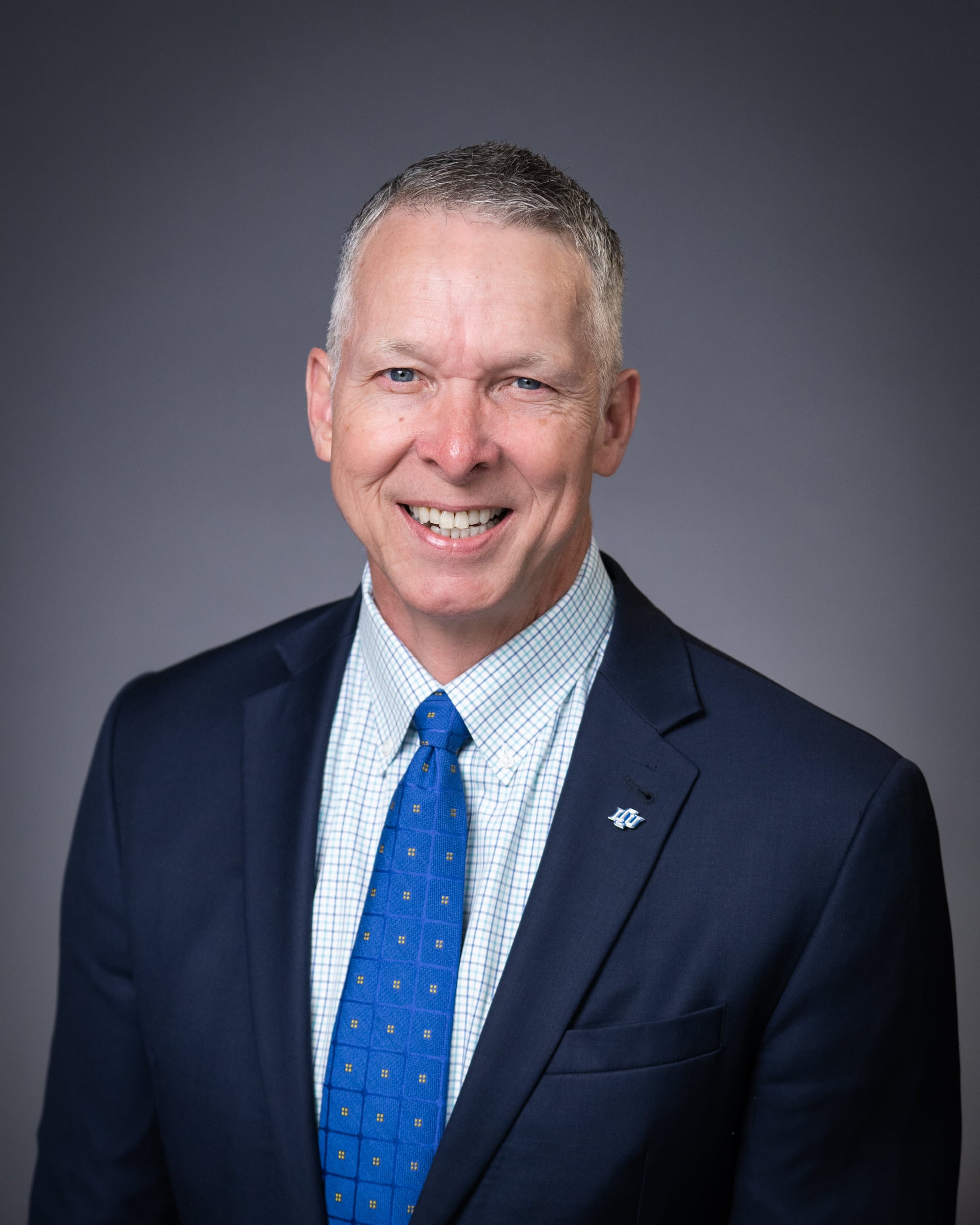
Scott McDowell
McDowell said he sees “a very strong commitment to following Christ and trying to be disciples and make disciples and help students sort that out.”
“We all have slightly different ways of approaching it and different contexts,” he said. “The work Jim Gash is doing in California is really good. He’s in a completely different culture than in West Texas. Harding does a fantastic job of being in a more isolated community. Lipscomb, Lubbock Christian and OC are serving larger, more urban places. But they’re all good people doing hard work in different settings and being faithful.”
Jones and Westbrook also spoke to the impact of financial differences.
“The major differences I see have to do with resources available to different schools,” Westbrook said. “There’s some ideological differences that people like to talk about. But when you compare a location, physical plant, endowments, we are not the same across our schools.”
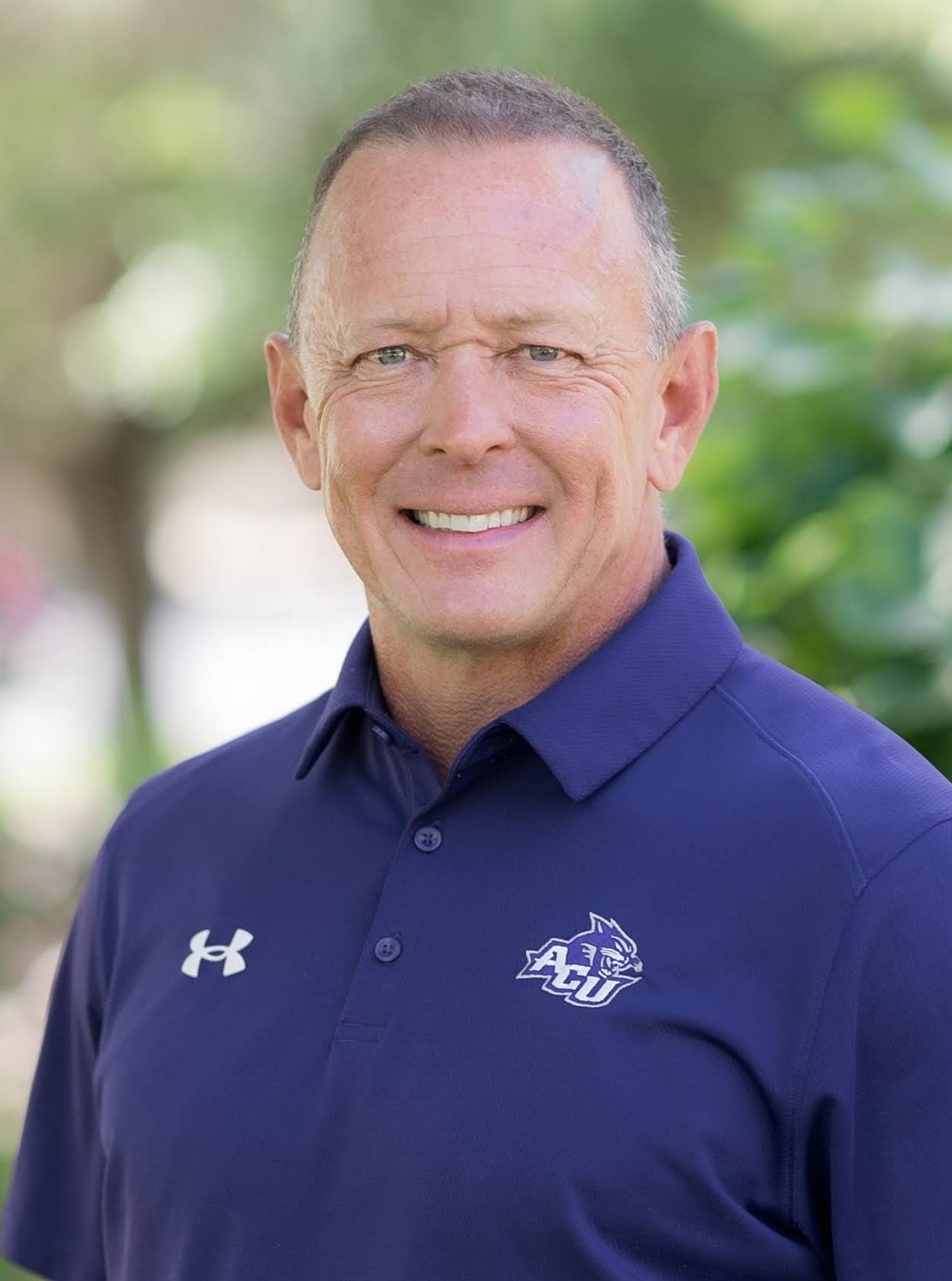
Phil Schubert
Jones concurred: “Pepperdine is less enrollment-driven than the rest of us — ACU’s endowment has grown very large,” he said. “They have some luxuries some of the rest of us don’t have.”
They are not the same. Except when they are.
Schubert said it’s a balancing act — for all the universities — to uphold the things “that reflect who we are but not in a way that restricts us from leaning fully into the call God has given us — a call which I believe is a whole lot more broad than just serving people among Churches of Christ.
“We will forever be working hard and diligently,” he added, “regardless of students’ religious traditions, to help them form their full identity in Jesus and become a better follower of him. That crosses every denominational line.”
CHERYL MANN BACON is a correspondent for The Christian Chronicle. She served for 20 years as chair of the Department of Journalism and Mass Communication at Abilene Christian University in Texas.
While the number of Churches of Christ declines in the…

In the “Who Are We?” series, The Christian Chronicle is…
‘You think you’re the only ones going to heaven.” That’s…
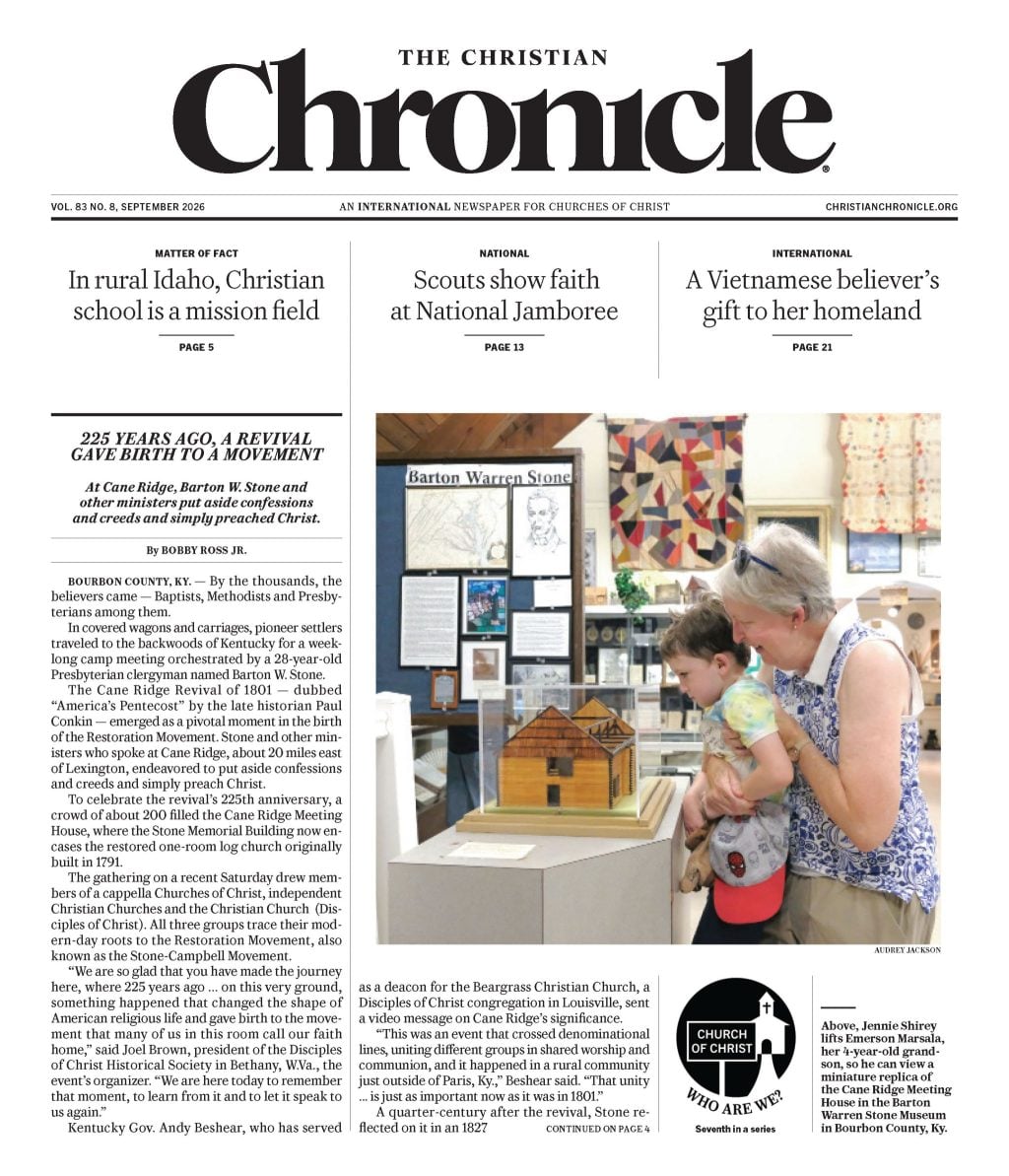
BOURBON COUNTY, KY. — By the thousands, the believers came —…

MONTGOMERY, ALA. — Sectarian label or divine ownership? What does…

The parable of the lost sheep wasn’t written about church…
Your donation helps us not only keep our quality of journalism high, but helps us continue to reach more people in the Churches of Christ community.